
Gender plays a role in how students think of themselves. It affects their relationships, their social lives and impacts their expectations about further education and careers.
Gender Equity in Education Matters.

Gender stereotypes influence children’s confidence, aspirations, and subject choices from an early age. Gender unconscious and conscious biases can limit opportunities and reinforce inequality throughout life.
Free workshops on Gender Unconscious and Conscious Bias for Dundee primary school educators.
We know from our discussions with Dundee primary school educators, they do not benefit from gender bias training. They are interested in our live, in-person workshops to improve their understanding.
Our free workshops explore:
pervasive nature of gender stereotypes in education and beyond
how stereotypes originate and persist from early years to adulthood
provide practical strategies to recognise and challenge bias in everyday interactions
Teacher Benefits:
Gain a deeper understanding of how stereotypes become embedded
Practical tools and actionable steps to challenge stereotypes within the classroom and school environment.
Pupil Benefits:
Improved Academic Outcomes
Increased Engagement & Confidence
Reduced Stereotyping
Increased Mental Health & Well-being
Broader Aspirations
Better Social-Emotional Learning
We aim to help address the inequalities in young people’s lives that can be driven by gender bias.
We are planning to two workshops in November 2026 for Dundee primary school educators. Our workshops are funding dependent. For more information about our free workshops, please contact sam@equalathome.org.uk
Equal at Home is a provider on Dundee City Council’s Flexible Framework for Education and Social Support Services - Children and Families for 2026-2028.
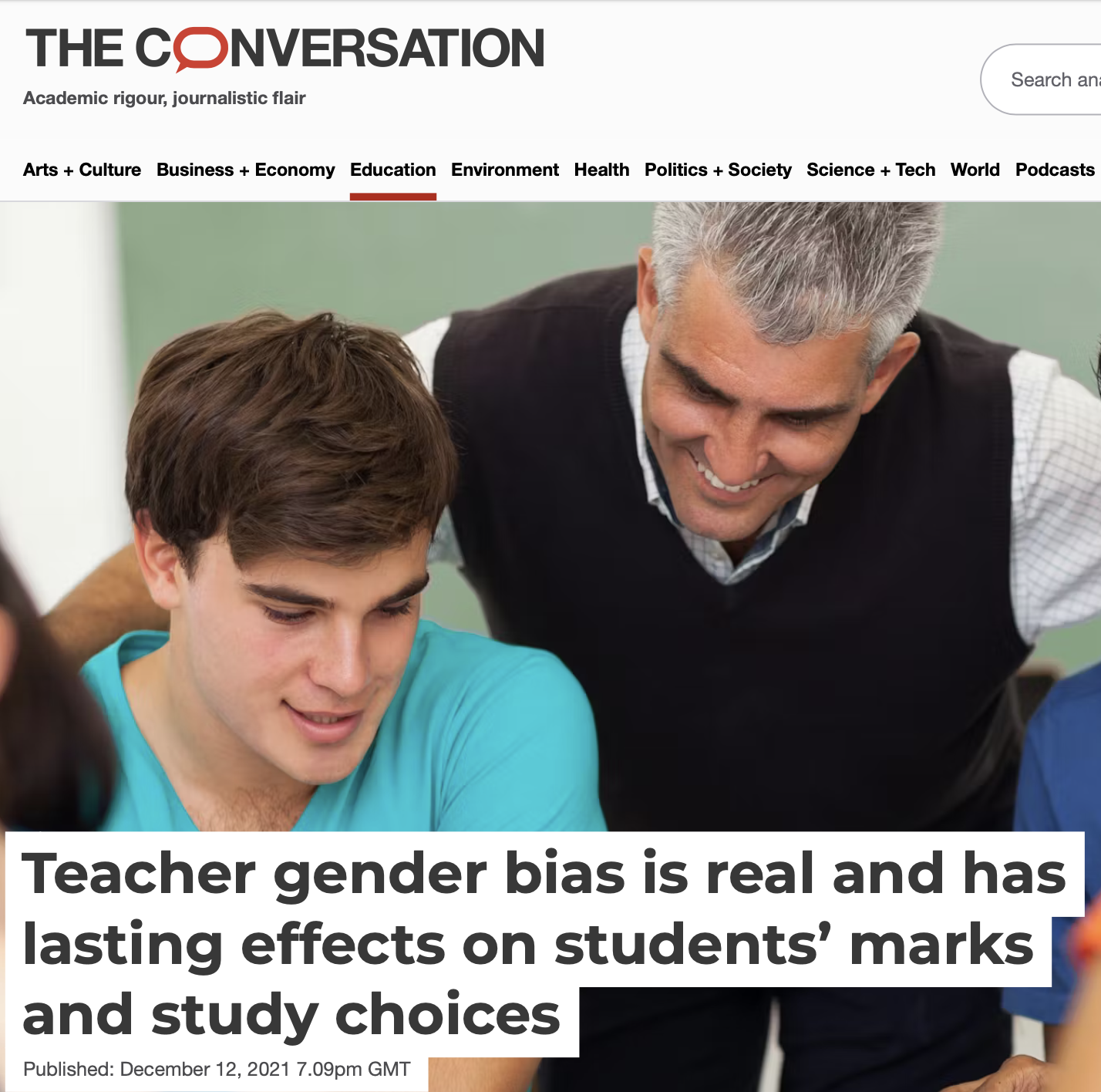
Source: The Conversation 2021. Read full article.
Girls often receive less attention from their teachers.
Girls hear more comments about their appearance than about their academic skills.
Girls receive less and lower quality feedback than boys.
Source: Dr Mary Andres, Professor of Clinical Education, USC Rossier School of Education (University of Southern California).